

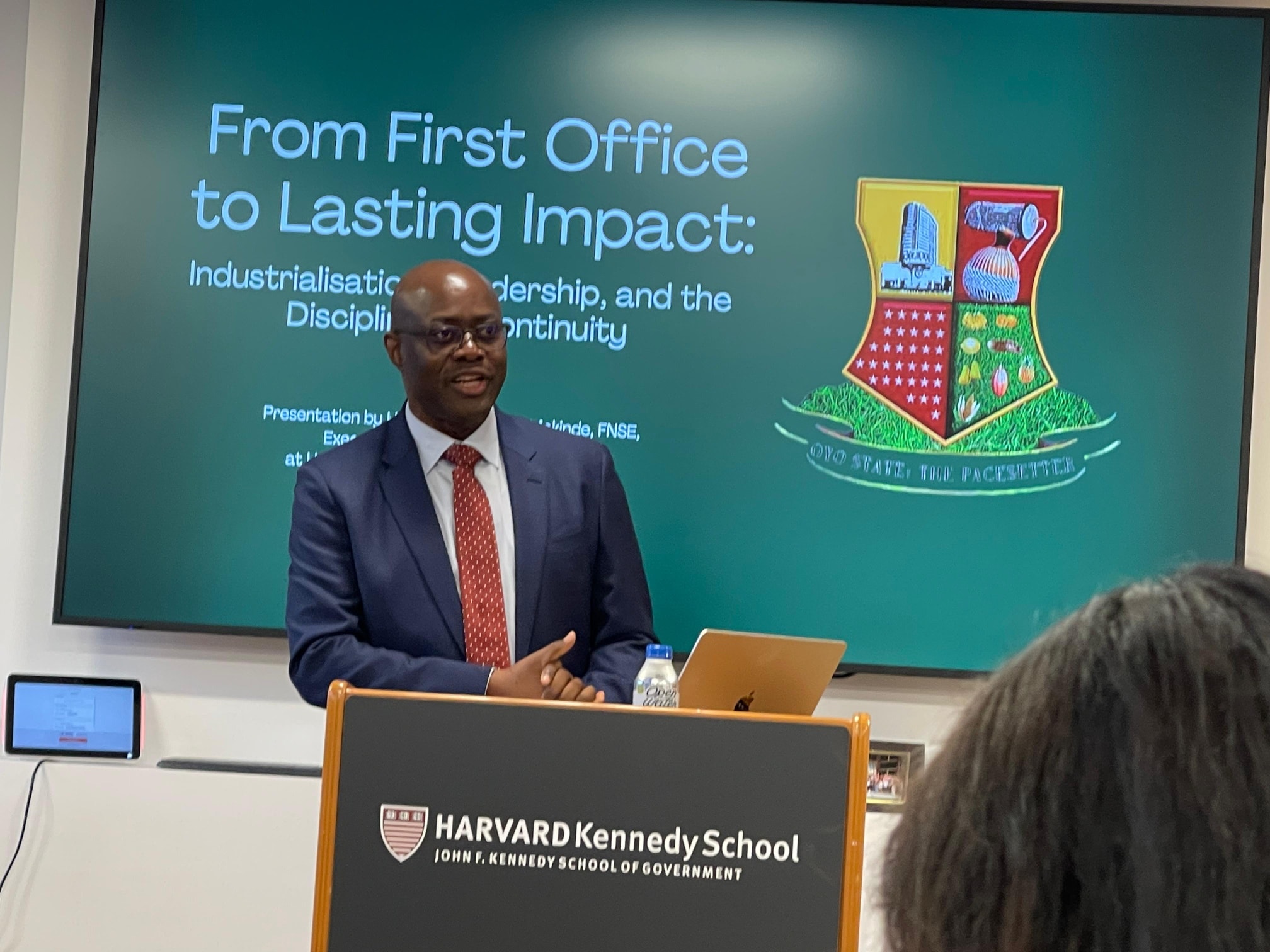
Oyo State, Governor, Engr Seyi Makinde, has restated his administration’s industrialisation agenda and stressed the importance of institutional continuity in governance, during a lecture delivered at the Harvard Kennedy School on 22 April 2026.
Speaking on the theme “From First Office to Lasting Impact: Industrialisation, Leadership, and the Discipline of Continuity,” Makinde said industrialisation in Africa must be understood not as abstract policy but as a practical outcome driven by infrastructure, agriculture, and governance systems.
He highlighted key initiatives under his administration, including road construction linking rural and urban economic zones, agribusiness development projects, and efforts to expand the state’s internally generated revenue.
According to him, Oyo State’s development strategy, outlined in the 2019–2023 roadmap, prioritised infrastructure as the foundation for economic growth, particularly through improved road networks supporting agricultural production and market access.
Governor Makinde cited the Fasola agribusiness project as a major example of the state’s industrialisation model, noting that the initiative has attracted private sector investment and development finance support, including from the African Development Bank.
He also acknowledged policy adjustments during implementation, referencing an early plan to explore maize export to Botswana, which was later revised based on market feasibility assessments.
On fiscal performance, the governor said the state’s internally generated revenue rose significantly during his tenure, while positioning Oyo as a growing contributor to national tax revenues.
The governor further emphasised transparency and citizen engagement, stating that governance systems in Oyo State were designed to improve feedback mechanisms between government and residents through regular communication channels and public engagement platforms.
A key part of his address focused on governance continuity, where he argued that sustainable development depends on institutions rather than individuals. He noted that policy stability, long-term planning, and investor confidence are critical to maintaining economic progress beyond political transitions.
He added that leadership succession should prioritise the preservation of institutional frameworks rather than personal loyalty, stressing that governance outcomes should outlive individual administrations.
Governor Makinde concluded that industrialisation in Africa will depend on disciplined leadership, consistency in policy direction, and the strengthening of institutions capable of sustaining development over time.








Leave a Reply