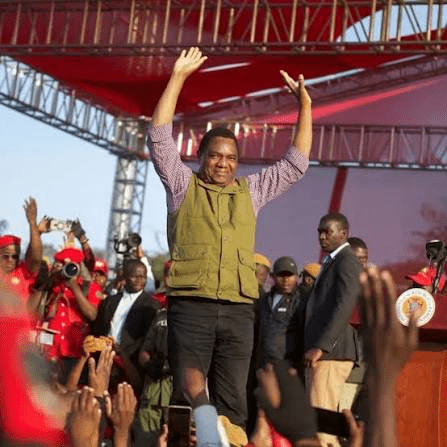

President Hakainde Hichilema has been sworn in for a second five-year term in office amid heightened political tensions following Zambia’s disputed presidential election and the detention of his main challenger, Brian Mundubile, on treason charges.
Hichilema took the oath of office on Tuesday at a ceremony in Lusaka attended by African leaders and other dignitaries.
The 64-year-old president secured about 60 per cent of the votes in the August 13 presidential election, according to official results, defeating Mundubile, who polled about 38 per cent.
The election was largely peaceful on voting day but was followed by allegations from the opposition of intimidation, restrictions on opposition activities and an uneven political playing field. International observers also raised concerns about aspects of the electoral process.
Mundubile, a former government minister and leader of the National Reconciliation Party for Unity and Prosperity, rejected the election outcome and alleged irregularities in the counting process.
He went into hiding after security forces raided a property linked to him on August 14, a day after the election. Authorities said the operation was connected to an alleged national security threat and that weapons and other military equipment were recovered.
A former cabinet minister, Mutotwe Kafwaya, was killed during the operation, while several people were arrested.
Mundubile and his political allies rejected allegations that they were planning an armed insurgency.
The opposition leader later surrendered to authorities and was questioned over alleged treason. His lawyer subsequently confirmed that Mundubile and his running mate, Makebi Zulu, had been formally charged with treason.
The charges have added to concerns about Zambia’s political climate as Hichilema begins his second term.
Mundubile also faced difficulties in challenging the presidential election result in court. Zambia’s Cabinet Office said the seven-day period allowed for filing a presidential election petition expired without the Judiciary receiving a petition, paving the way for Hichilema’s inauguration.
The developments have placed Zambia’s democratic institutions under renewed scrutiny, particularly because the country’s political history has included relatively peaceful transfers of power since the return to multiparty democracy in 1991.
Hichilema, who first assumed office in 2021, has been credited with efforts to stabilise Zambia’s economy and address the country’s debt challenges. His administration has also highlighted reforms in education, agriculture and other sectors as part of its first-term achievements.
With his second term now underway, the president faces the challenge of consolidating those economic gains while addressing concerns over political freedoms, opposition rights and the rule of law.
For Zambia, the treatment of Mundubile and other opposition figures is likely to remain a significant issue as the country moves beyond the election and into Hichilema’s second term.